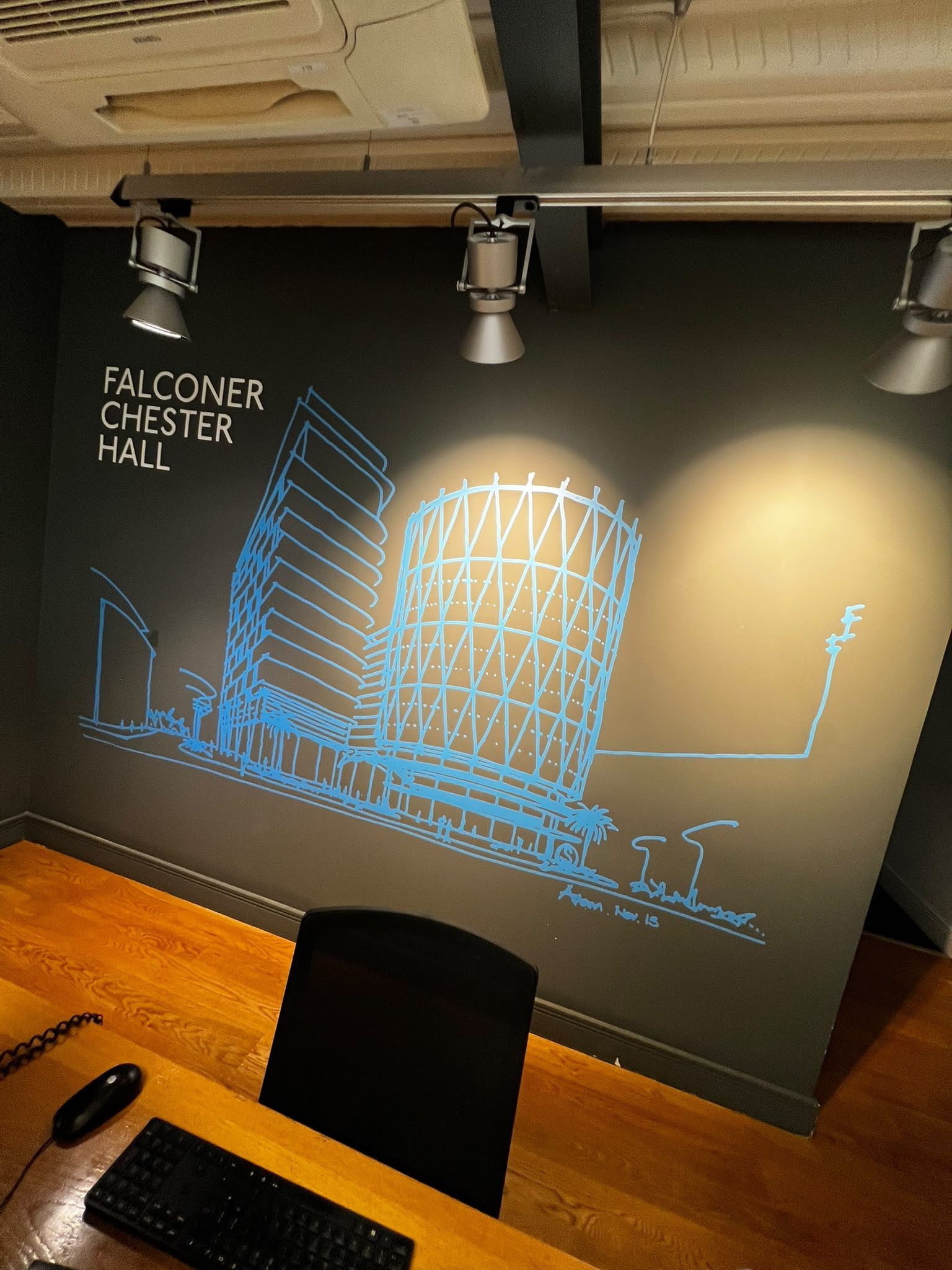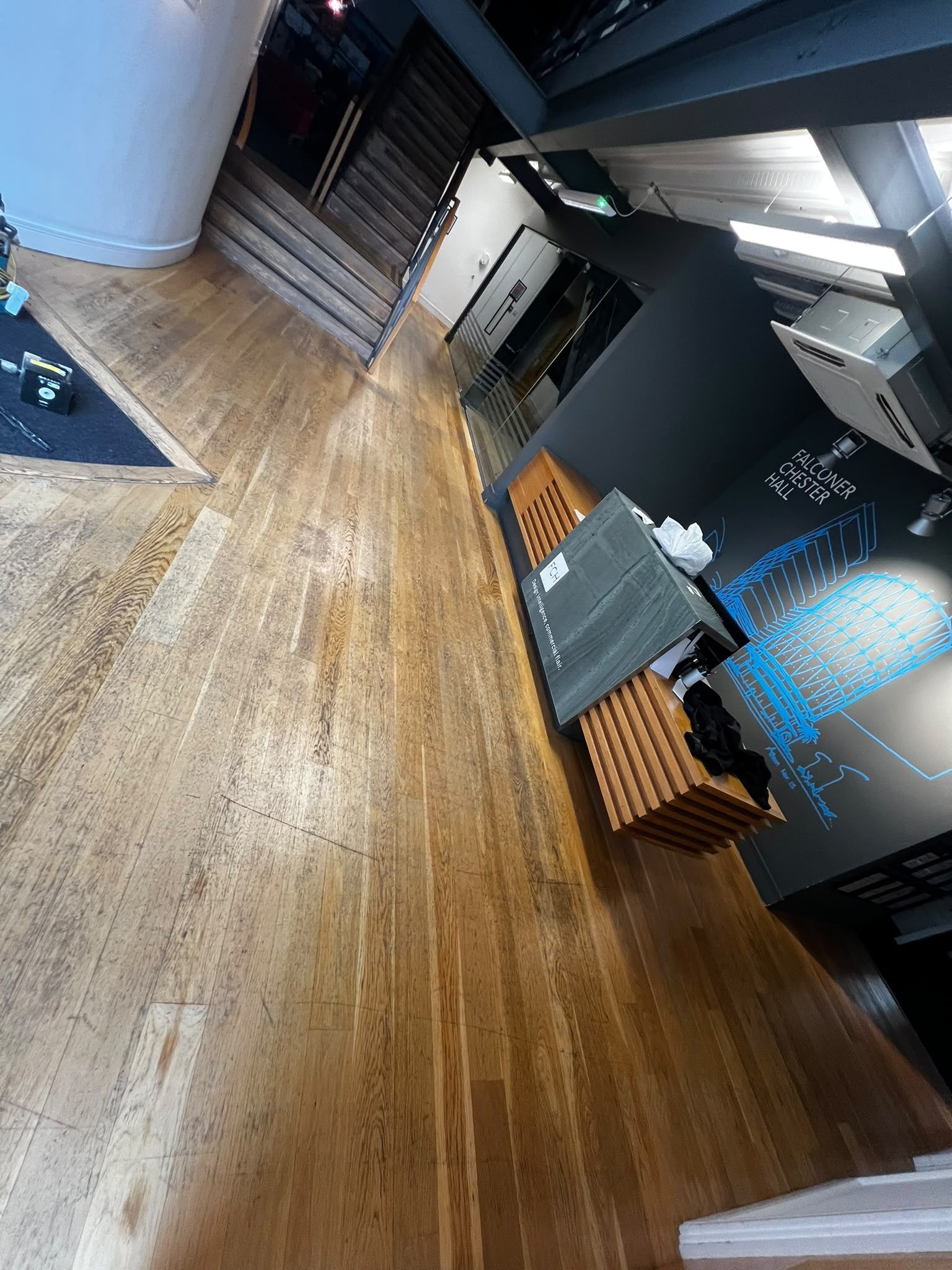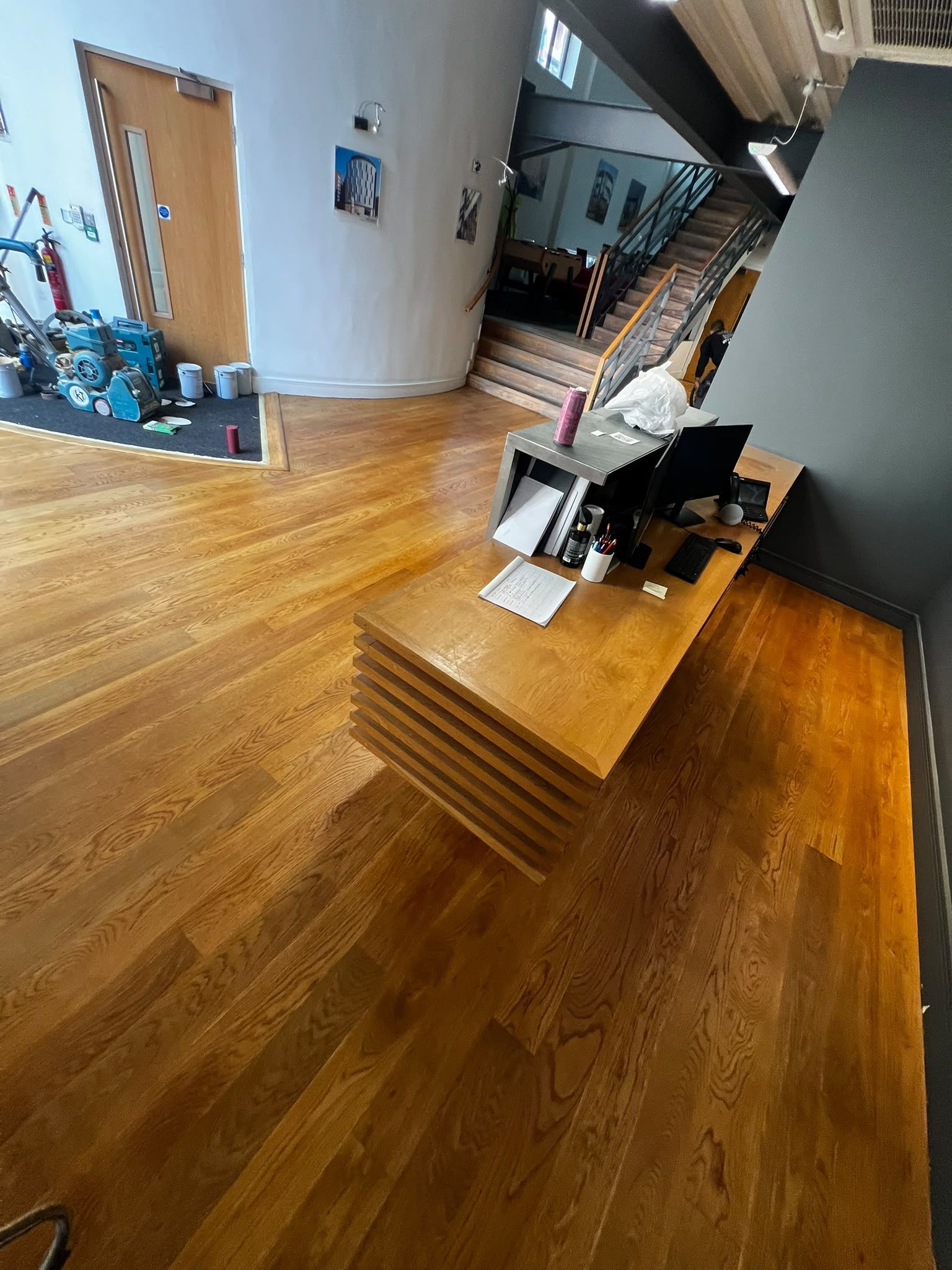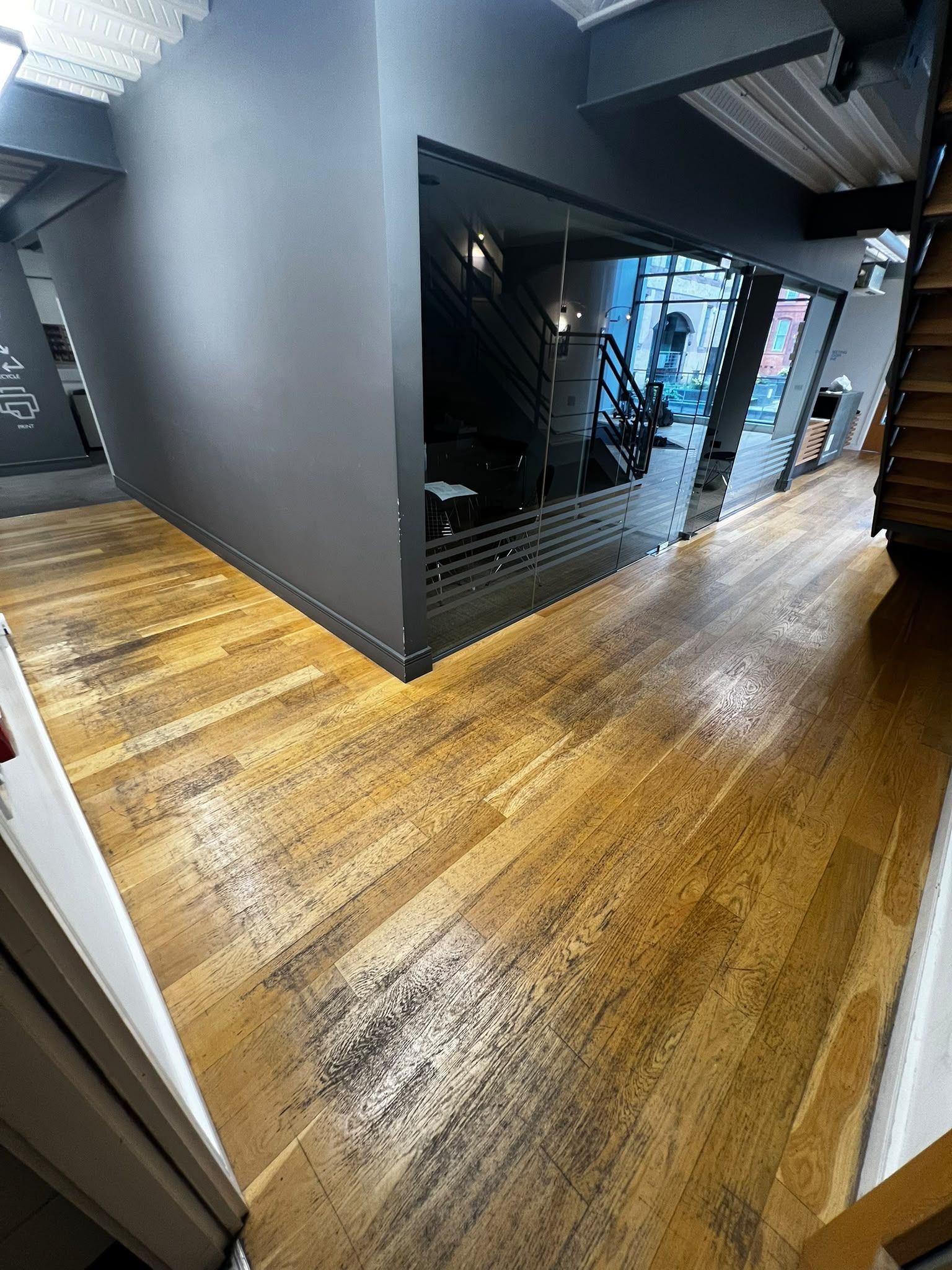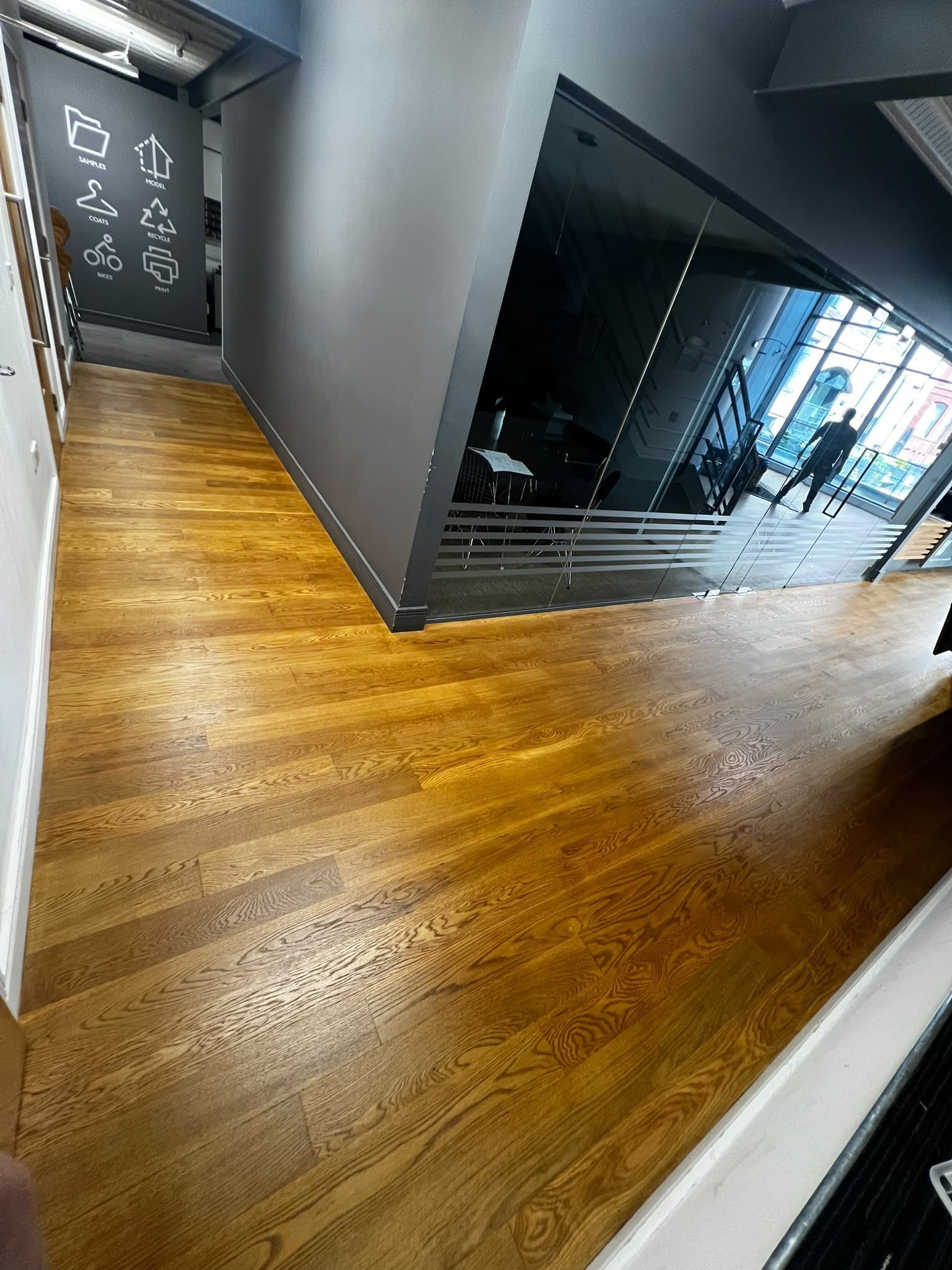
Oak Floor Restoration for Falconer Chester Hall Architects in Liverpool
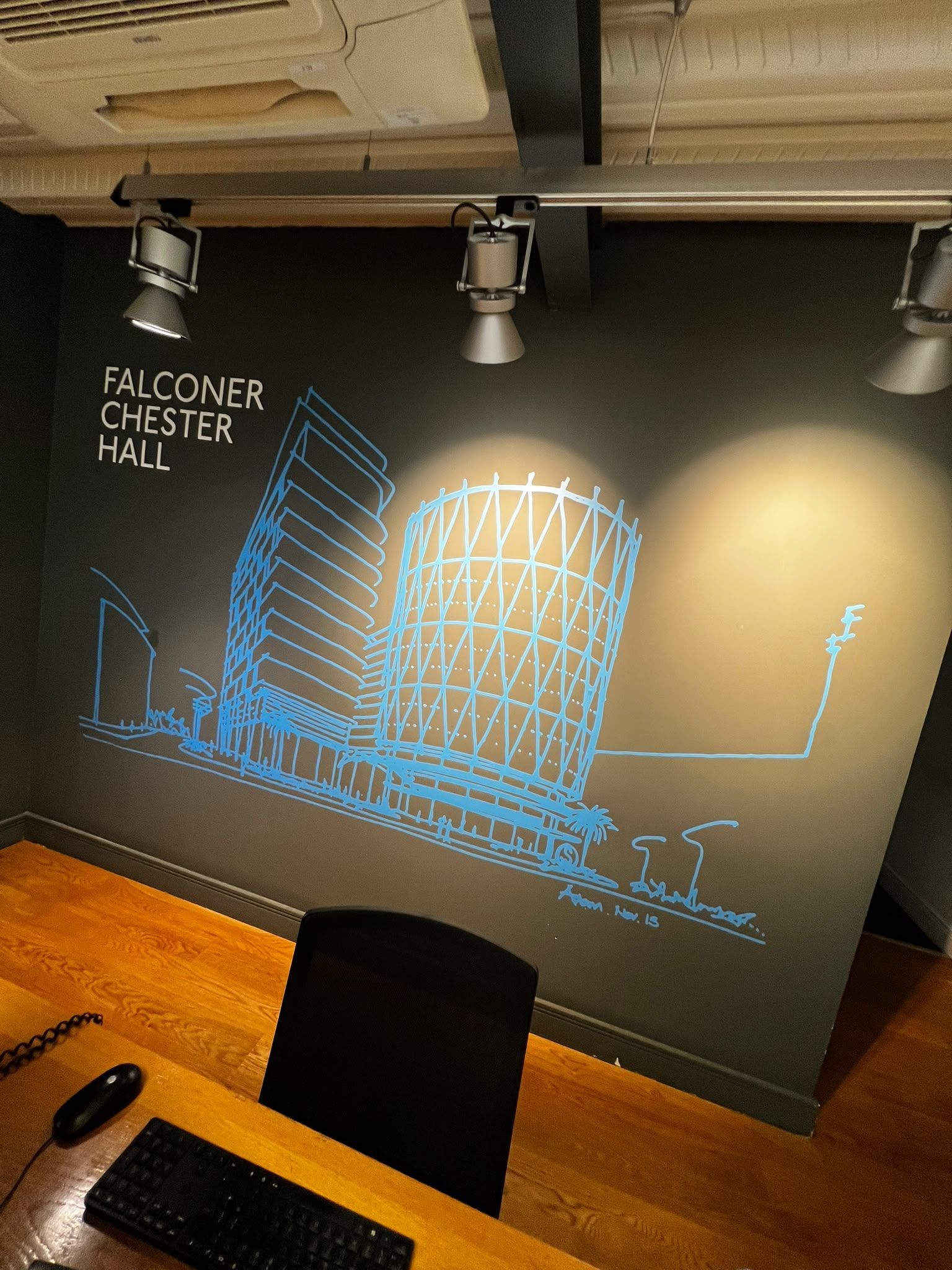
When restoring a wooden floor in a commercial environment, achieving a durable finish is only part of the challenge. The floor also needs to complement the design of the space.
For a recent project in
Liverpool City Centre, we were asked to restore an oak floor within the offices of
Falconer Chester Hall Architects. The brief was to transform the existing floor while ensuring the finished colour complemented the oak tones already used throughout the interior.
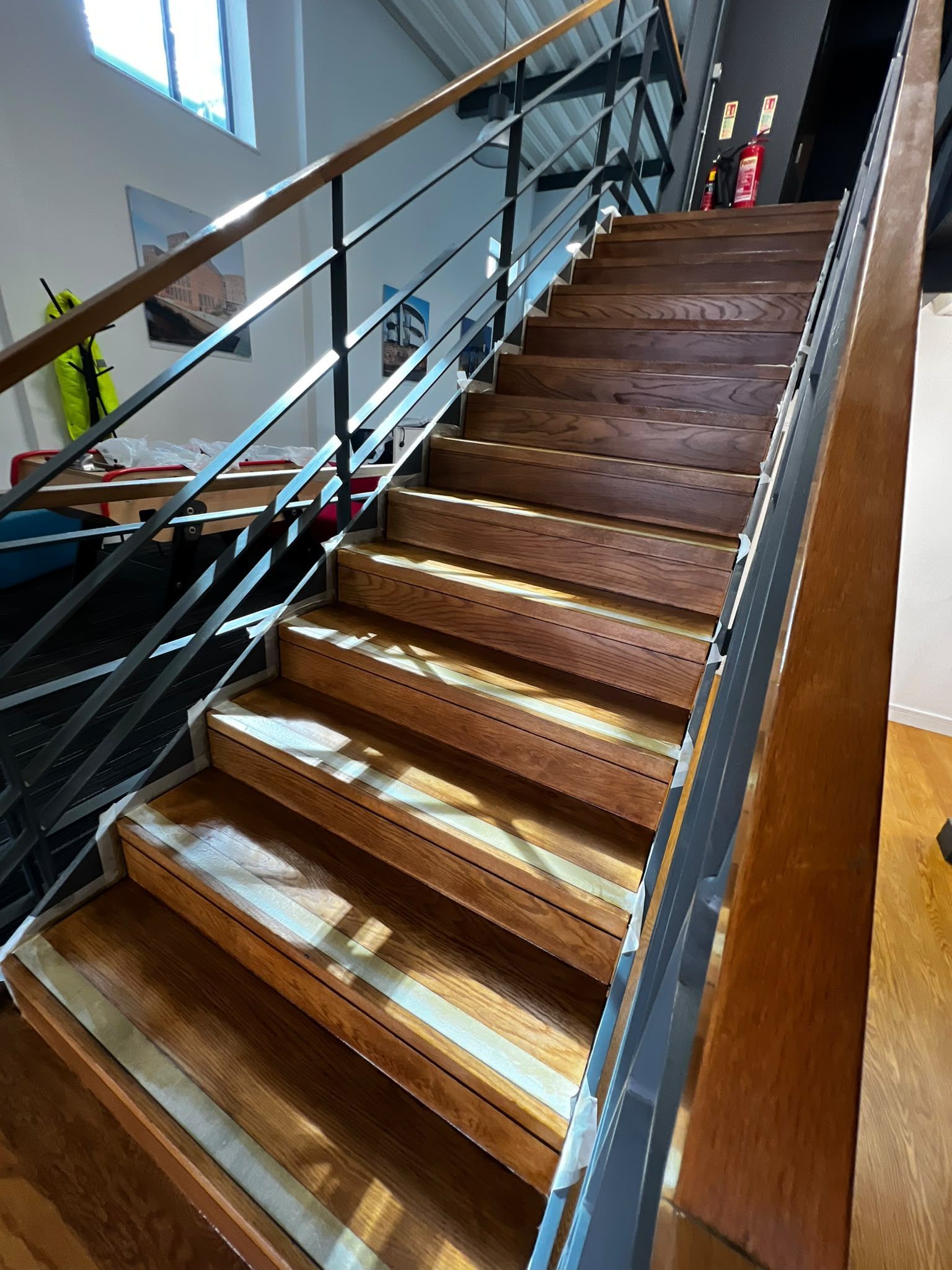
The project involved carefully sanding the oak floor, applying a carefully selected stain to achieve the desired colour, and finishing the floor with a high-traffic polyurethane lacquer designed to provide the durability required in a busy office environment.
The result was a hard-wearing, professionally restored oak floor that became a natural part of the overall interior design.
Preparing the Oak Floor
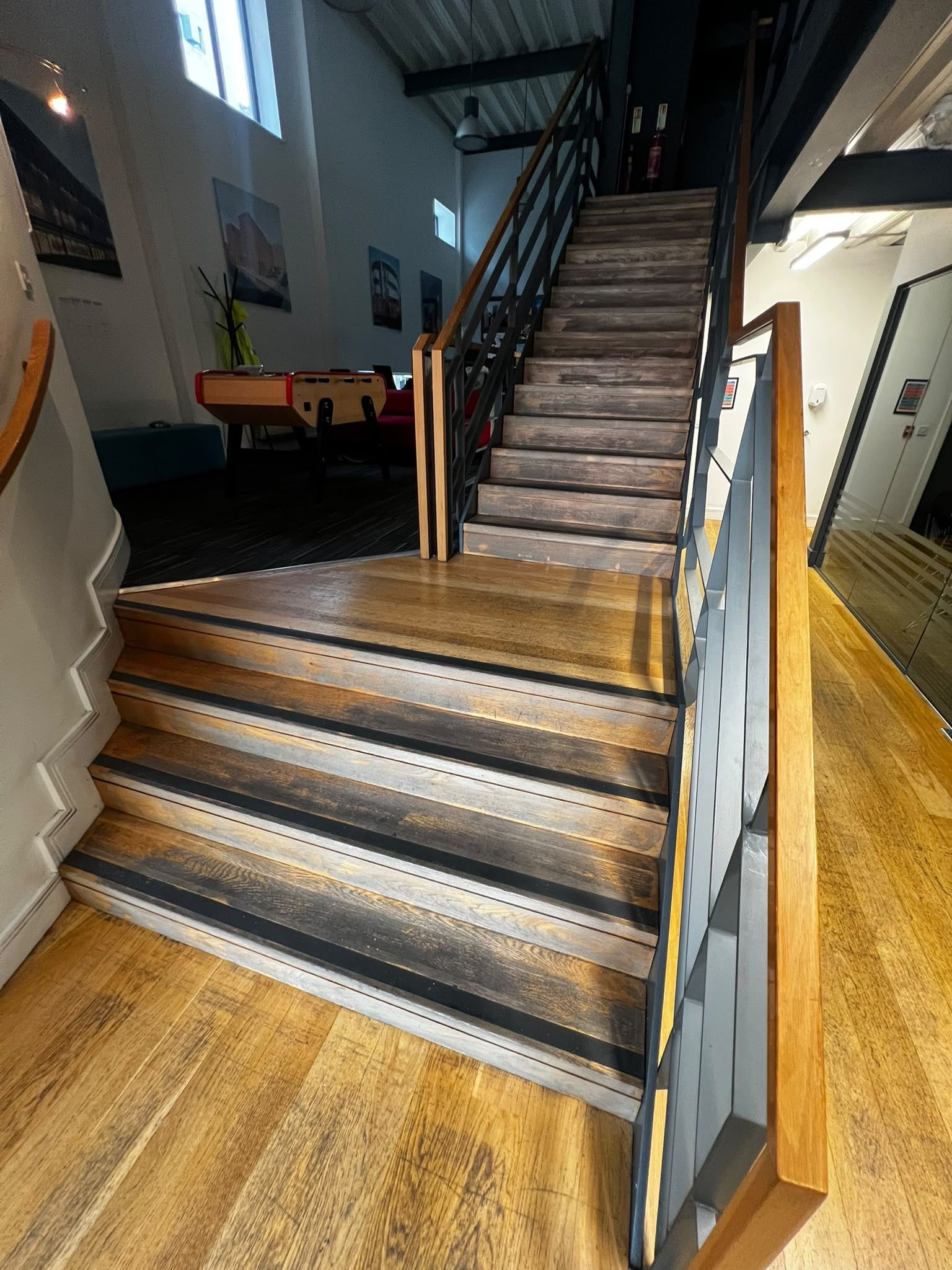
Before any stain could be applied, the existing floor needed to be professionally prepared.
Years of use in a busy office environment can leave wooden flooring with a variety of surface imperfections, including:
- Scratches and scuff marks.
- Areas of general wear.
- Dull or deteriorated existing finishes.
- Uneven colouring.
- Marks caused by regular foot traffic and furniture.
Sanding was therefore an important part of the restoration process.
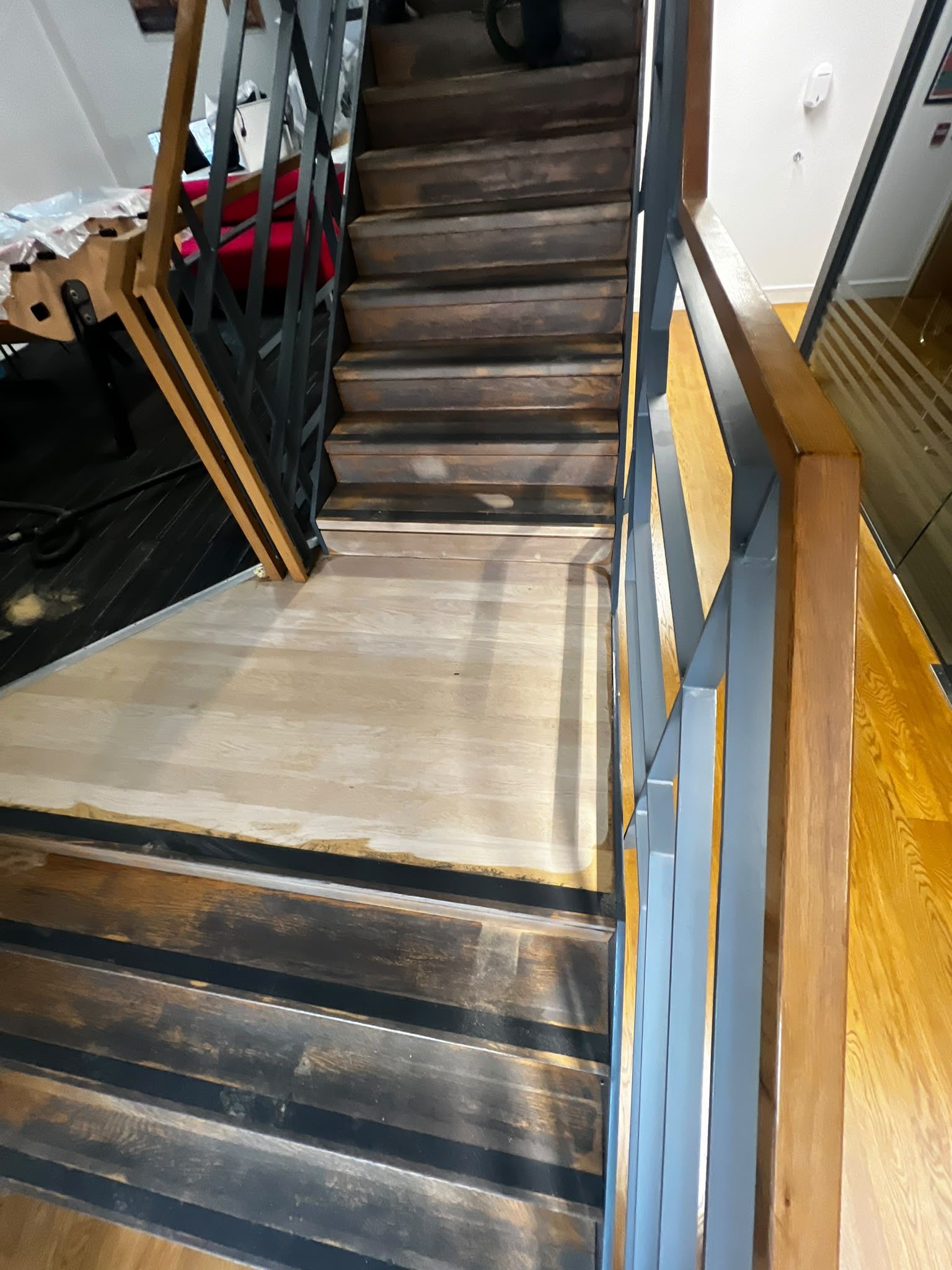
The existing finish was carefully removed through a series of sanding stages, gradually refining the surface and preparing the oak to accept the new stain evenly.
Achieving a consistent stain requires a properly prepared surface. Any remaining finish, contamination or uneven sanding can affect how the timber absorbs the stain and ultimately influence the finished colour.
Revealing the Natural Oak
As the old finish was removed, the natural character of the oak began to emerge.
One of the advantages of professionally sanding an existing timber floor is that it allows the natural grain and variation within the wood to become visible again.
Rather than covering this character, the chosen stain was used to enhance the appearance of the oak while bringing its colour closer to the surrounding timber within the office.
This created a much more cohesive relationship between the flooring and the wider interior.
Matching the Oak Colour
The staining stage was particularly important on this project. The intention wasn't simply to make the floor darker or lighter. The aim was to create a colour that worked alongside the existing oak used throughout Falconer Chester Hall's interior.
A carefully selected stain was applied to the prepared timber, allowing the natural grain of the oak to remain visible while introducing the desired tone.
This approach demonstrates one of the benefits of restoring existing wooden flooring: it can be
customised to suit a particular interior design scheme.
Rather than being limited to the colour of the existing timber, staining gives designers and property owners greater control over the finished appearance.
Creating a Floor Suitable for a Busy Office
Once the desired colour had been achieved, the next consideration was durability.
An office floor has to cope with significantly more use than a typical domestic floor. Employees, clients and visitors can pass through the space every day, while office furniture and chairs can create additional wear.
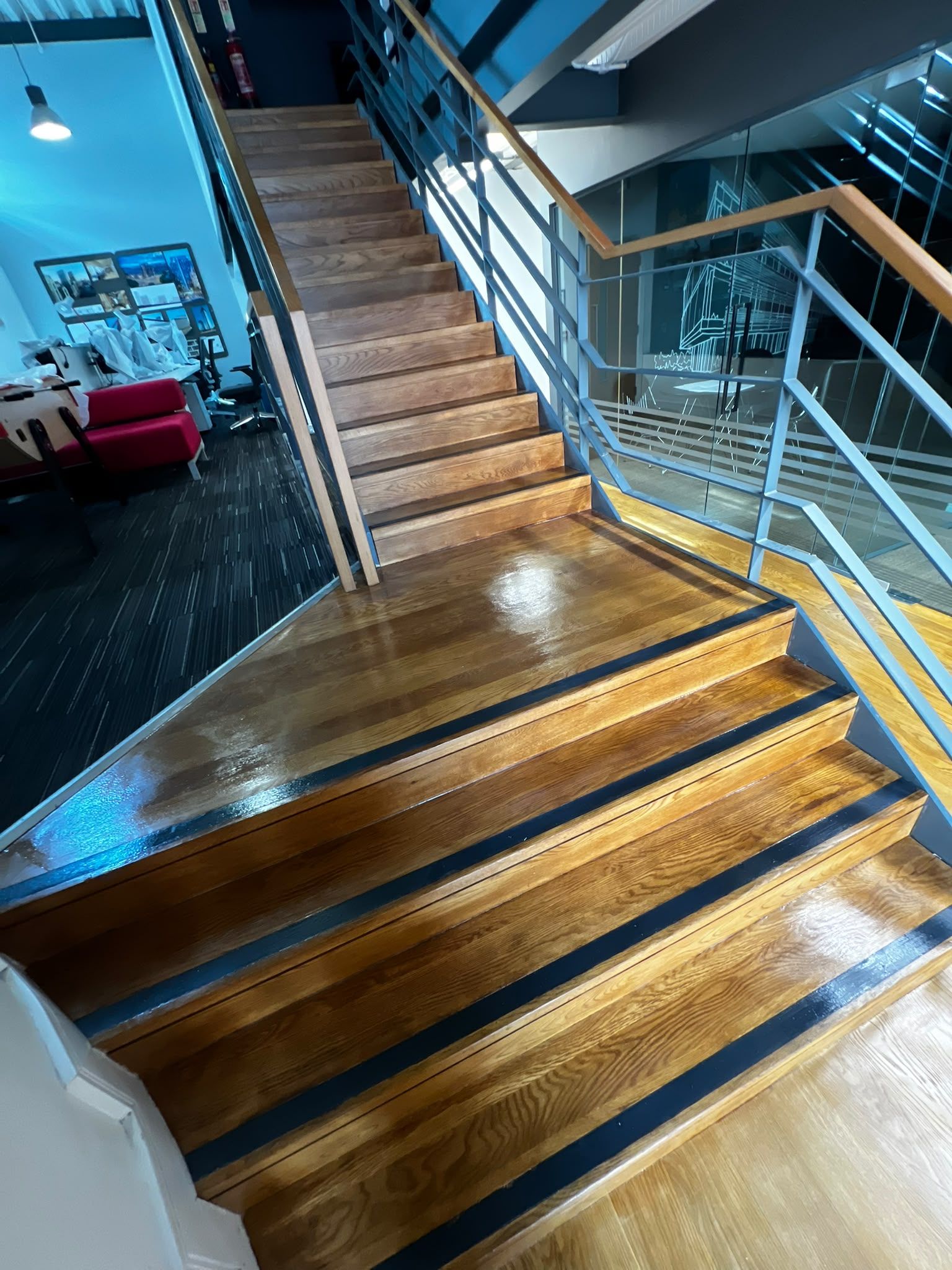
For this reason, the floor was sealed with a high-traffic polyurethane lacquer.
The lacquer provides a durable protective layer over the stained oak, helping to protect the timber against the everyday demands of a commercial workplace.
It also creates a surface that is easier to clean and maintain, making it a practical choice for an active office environment.
Why High-Traffic Lacquer Is Important in Commercial Spaces
Commercial flooring needs to balance appearance with performance.
A beautifully restored floor won't remain that way for long if the finish isn't suitable for the environment in which it is being used.
High-traffic polyurethane lacquer can provide:
- Increased resistance to everyday wear.
- Protection against scuffs and scratches.
- A sealed surface that is easier to maintain.
- Long-term protection for the underlying timber.
- A professional appearance suitable for commercial interiors.
Choosing the correct finish is therefore just as important as the sanding and staining process itself.
For this project, the high-traffic lacquer provided the protection needed without compromising the appearance of the stained oak.
A Floor Designed Around the Architecture
Working within an architect's office provided an interesting opportunity to demonstrate how flooring can contribute to an overall design scheme.
Rather than treating the floor as a separate element, the oak was considered as part of the wider interior.
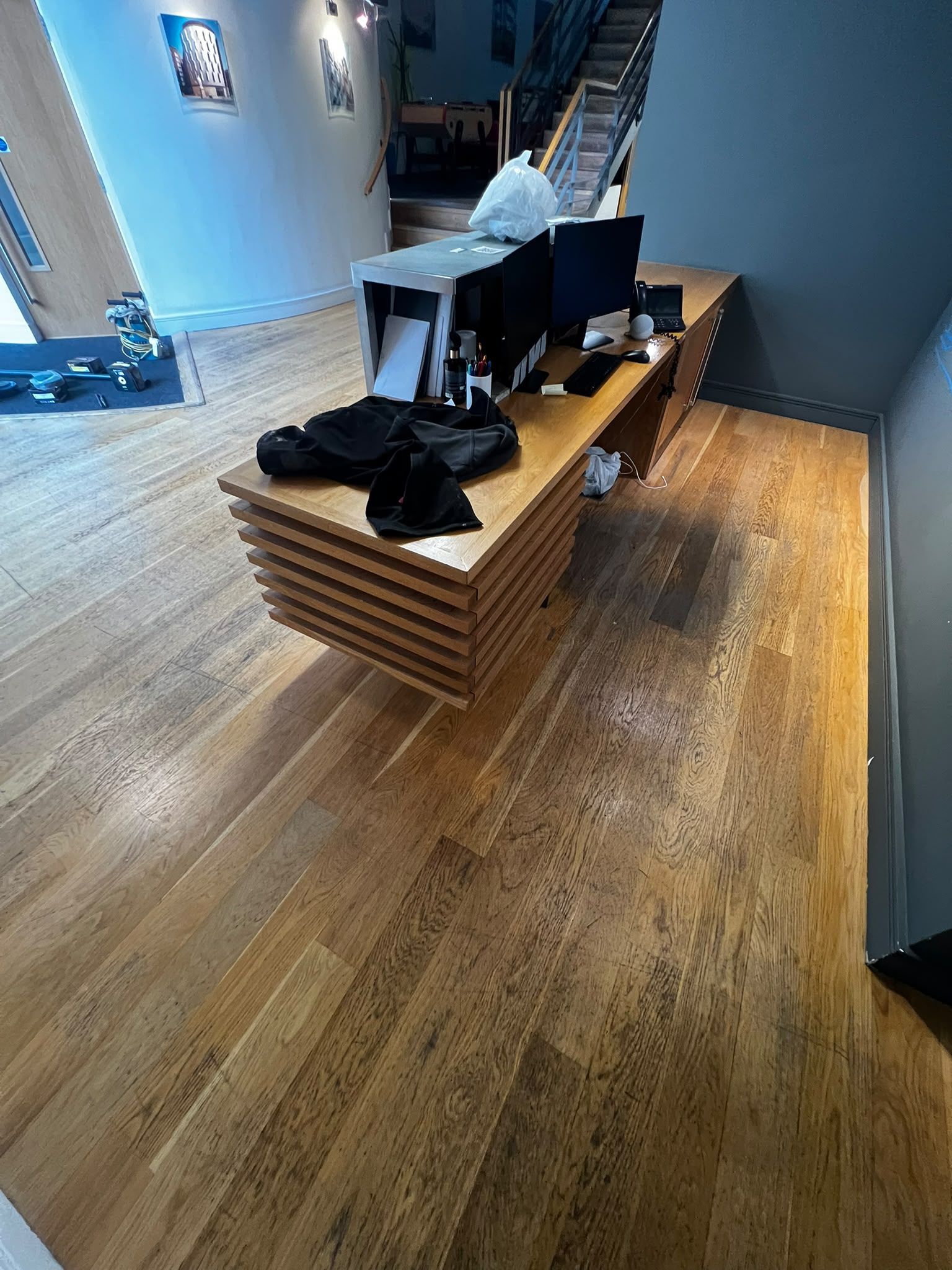
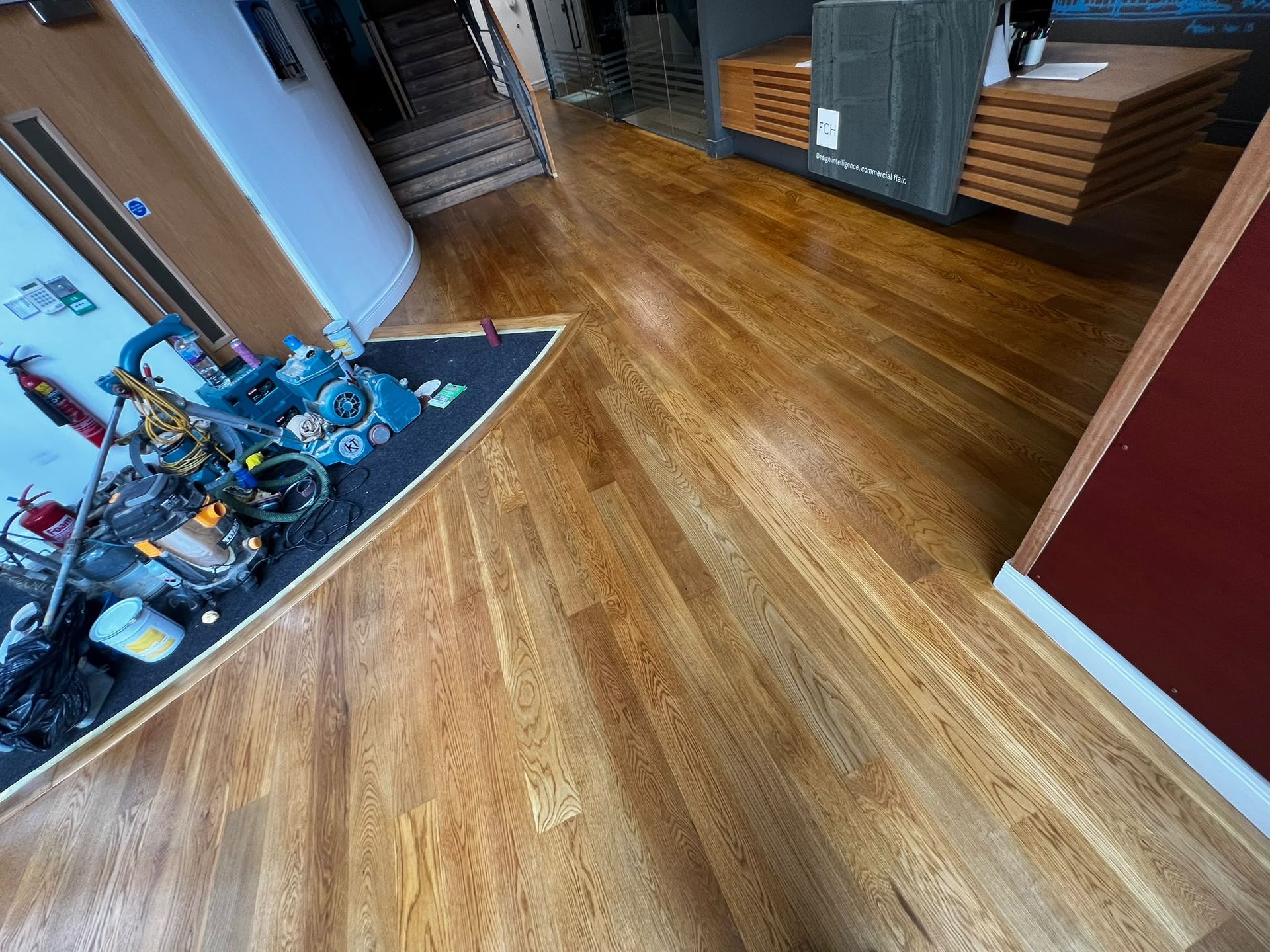
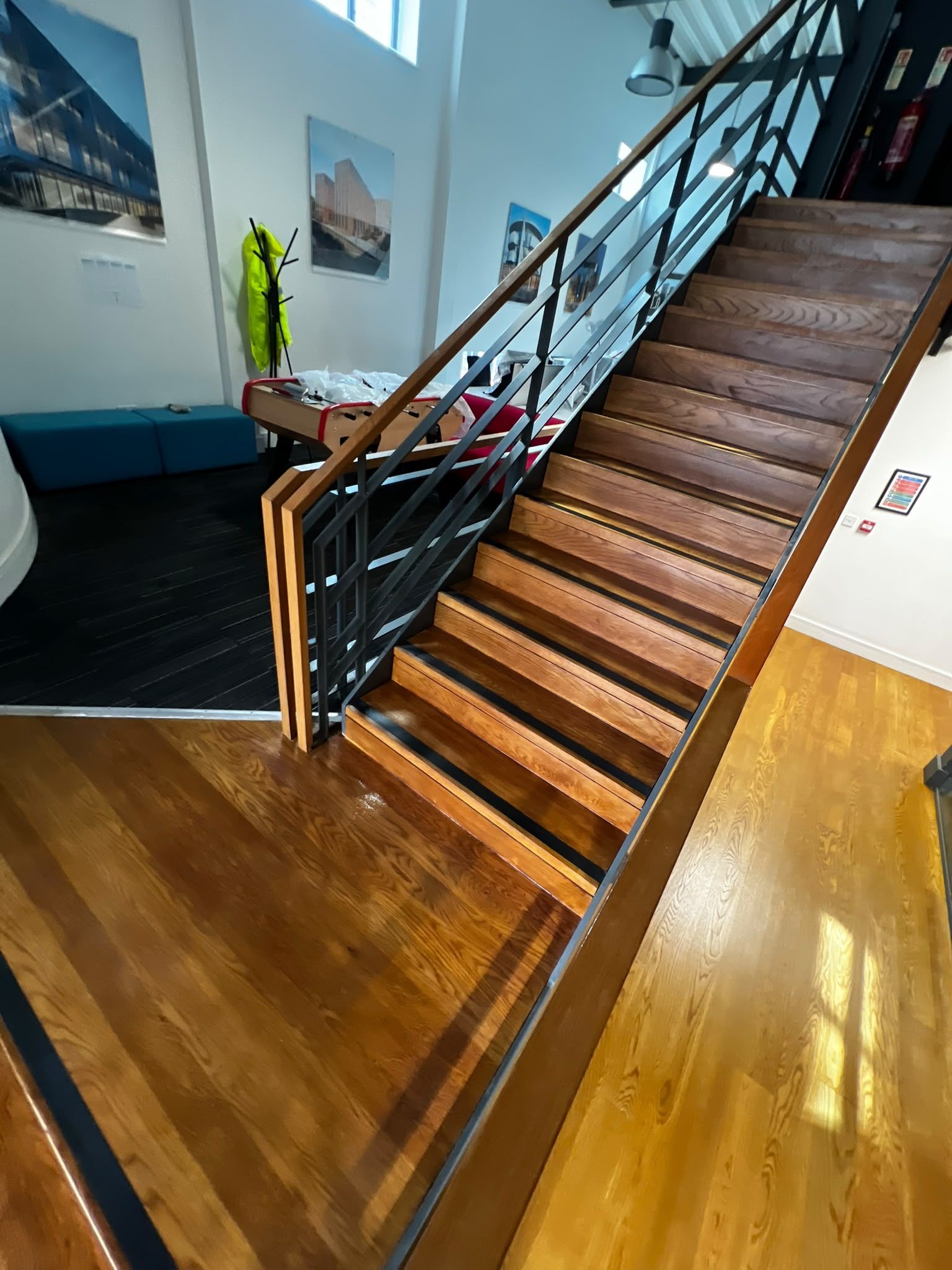
The finished colour complemented the existing oak throughout the office, helping to create a consistent material palette.
The natural grain of the timber remained visible, while the stain gave the floor the depth and tone required to sit comfortably alongside the other oak features.
This is particularly important in contemporary commercial interiors, where natural materials are often used to create warmth and contrast against more modern architectural elements.
The Finished Result
Following sanding, staining and lacquering, the transformation of the oak floor was significant.
The previously worn surface was replaced with a clean, consistent and professionally finished floor that complemented the surrounding interior.
The completed floor offered a combination of:
Restored timber:
The sanding process removed years of surface wear and revealed the natural oak beneath.
Custom colour:
The stain allowed the flooring to be matched to the existing oak tones throughout the interior.
Commercial durability:
The high-traffic polyurethane lacquer provided the protection required for an active office environment.
Improved appearance:
The finished floor became an integral part of the office's overall design rather than simply a functional surface.
Why Restore Rather Than Replace an Oak Floor?
When an existing timber floor becomes worn, replacement isn't always necessary.
Professional sanding and restoration can give an existing floor a completely new lease of life while retaining the character of the original timber. Restoration can also offer greater flexibility than replacing the floor.
Through sanding, staining and finishing, an existing oak floor can be:
- Refreshed.
- Recoloured.
- Matched to an interior design scheme.
- Protected against future wear.
- Adapted to suit changing requirements.
For commercial property owners, this can provide a practical way of improving an interior without completely replacing an existing timber floor.
Commercial Floor Sanding and Restoration in Liverpool
This project for
Falconer Chester Hall Architects demonstrates how professional floor restoration can combine craftsmanship, design and durability.
From the initial sanding through to colour matching and the application of a high-traffic polyurethane lacquer, every stage of the process contributed to the finished result.
The project wasn't simply about making an old floor look new again. It was about creating a floor that worked with the architecture and interior design while being capable of handling the demands of a modern working environment.
If you have an existing oak or wooden floor in an office, commercial property or professional workspace in Liverpool, sanding, staining and refinishing could provide a cost-effective way to transform the space without replacing the original timber.
✨Looking to restore a commercial wooden floor in Liverpool? Contact us today for a free consultation on floor sanding and finishing.